

November 1, 2026 · Editorial Team
Bulk Peptide Orders: How Volume Discounts Work
Learn how bulk peptide order volume discounts work, from discount tiers and minimum quantities to requesting a quote and verifying quality before you buy.
Quick Summary
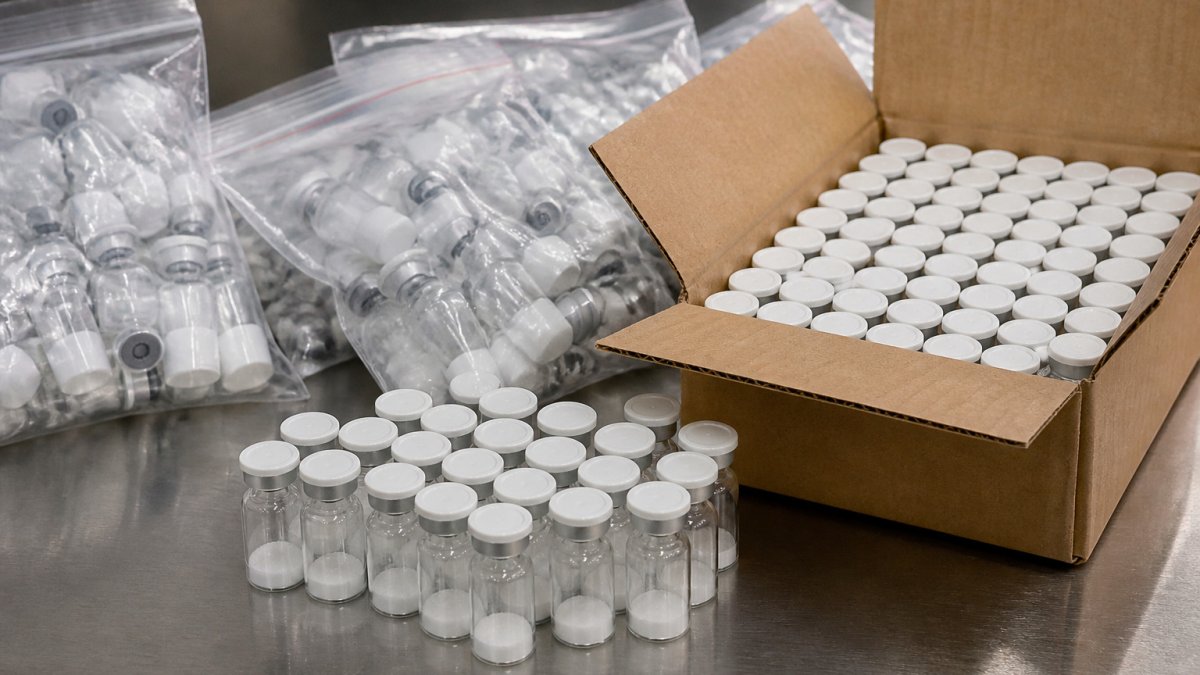
A bulk peptide order lowers the unit cost of each vial once a lab commits to a larger quantity, because suppliers spread fixed synthesis, testing, and packaging costs across more units. Exact tiers and pricing depend on quantity, product, and timing, so request a written quote for figures that apply to your order.
- Calculate landed cost per vial by adding shipping, payment fees, and storage to the tier price.
- Confirm whether discount tiers apply per line item or across the whole order.
- A batch-specific Certificate of Analysis should list the lot number, test methods, and purity.
- Buy to realistic demand, because the largest tier is not always the cheapest total outlay.
Table of Contents
- How Bulk Peptide Order Volume Discounts Work
- Discount Tiers, Minimum Quantities and a Worked Savings Calculation
- Requesting a Bulk Peptide Quote Step by Step
- Verifying Supplier Quality Testing and Certificates of Analysis
- Shipping and Storage Considerations for Large Orders
- Inventory Planning and Bulk-Order Risks
- Frequently Asked Questions
How Bulk Peptide Order Volume Discounts Work
Bulk pricing lowers the unit cost of each vial once a lab commits to a larger quantity, and a well-planned bulk peptide order can cut per-vial spending substantially. For a research team buying the same compound across several projects, that difference can add up quickly. Exact tiers and current pricing depend on quantity, product, and timing, so check the Quality Peptide USA website or request a quote for figures that apply to your order.
Volume discounts work because suppliers spread fixed costs across more units. Synthesis runs, analytical testing, documentation, and packaging all carry overhead that does not scale with each individual vial. When a buyer orders more, that overhead is shared, and the savings can pass through to the buyer.
Discounts can vary across products and orders. Read the terms carefully before assuming a discount applies to your specific request.
Discount Tiers, Minimum Quantities and a Worked Savings Calculation
Most bulk programs organize discounts into quantity tiers. Each tier sets a minimum number of units and a corresponding per-unit price. Minimum order quantities (MOQs) are the threshold you must reach before any tier applies. What most wholesale pages never show is how to actually run the math, so here is a repeatable method you can apply to any quote, plus two worked examples.

The four inputs you need before you calculate
- Standard unit price, the per-vial price at the lowest quantity you can order.
- Tier unit price, the per-vial price at the quantity you are considering.
- Tier threshold, the minimum unit count that unlocks that price.
- Landed cost adders, shipping, payment processing fees, and any cold-chain or storage cost the larger order creates.
The formula
Effective per-vial cost = (Tier unit price × units) + shipping + payment fees + storage cost) ÷ units
Total savings = (Standard unit price − Tier unit price) × units − added costs
Run both lines. The first tells you what you are really paying per vial; the second tells you whether the tier is worth it once adders are included.
Worked example 1, a single-compound tier jump
Suppose the standard price is per vial and a 20-vial tier prices at per vial. Shipping is a flat and there are no added storage costs.
- Gross savings: ( − ) × 20 =
- Landed per-vial cost: (( × 20) + ) ÷ 20 =
- Net savings after shipping: − =
The headline 20% discount is really about 18.75% once shipping is folded in. That is still a strong tier, but the number you should put in your budget is per vial, not .
Worked example 2, comparing two order sizes
A lab expects to use 30 vials over six months. Option A is 30 vials at the 20-vial tier price of . Option B is 50 vials at a deeper 50-vial tier price of but 20 vials will sit in storage for months.
- Option A landed cost: (( × 30) + ) ÷ 30 = per vial
- Option B landed cost: (( × 50) + ) ÷ 50 = per vial
Option B looks cheaper per vial, but you are tying up instead of and carrying 20 vials of inventory risk. If storage and expiration risk are low, B wins; if the study timeline is uncertain, A is the safer buy. The formula does not make the decision for you, it makes the trade-off visible.
Reading a tier table correctly
- Tiers usually apply per line item, not per order. Confirm whether mixing compounds counts toward a single threshold or whether each SKU is tiered separately.
- MOQs are floors, not targets. Reaching a tier does not mean you should; buy to realistic demand.
- Ask for the tier schedule in writing. A quote should itemize the standard price, each tier threshold, and the per-unit price at each tier so you can run the formula above.
- Watch for tier gaps. Some programs jump from 10 to 50 units with nothing in between; if your realistic order is 25, ask whether a custom quote is available.
This framework lets you test any tier against your real budget and project timeline, and it is the same math you should apply when comparing competing quotes side by side.
The article's two worked examples show how the same tier price can produce different landed per-vial costs once shipping is added.
| Scenario | Standard or tier price | Landed cost per vial |
|---|---|---|
| Example 1: 20-vial tier | standard, tier | |
| Example 2, Option A: 30 vials | tier price | |
| Example 2, Option B: 50 vials | tier price |
Requesting a Bulk Peptide Quote Step by Step
A written quote gives you an accurate figure to compare against your budget. Follow these steps to request one:
- Confirm the exact peptides, purity specifications, and vial sizes your studies require.
- Estimate total quantity across all planned projects over the next several months.
- Note your preferred delivery date and shipping address.
- Gather institutional or laboratory details that the supplier may need for eligibility.
- Submit your request and ask the supplier to itemize unit price, tier pricing, and shipping.
A clear request speeds up the response and avoids revisions. Be specific about quantities, because a quote for 10 vials can differ from one for 50.
Verifying Supplier Quality Testing and Certificates of Analysis
A bulk order is only as useful as the material's documented quality. Before committing a large budget, review the supplier's testing records, and do it with a checklist, not a glance. A Certificate of Analysis (COA) is the primary document, and it should be batch-specific, tied to the lot number on the vial you receive, not a generic sheet reused across products. To see the specific batch tests run on every lot, review Lab Testing You Can Verify.
The COA checklist
For each lot you plan to buy, confirm the COA includes:
- Lot or batch number that matches the label on the vial.
- Test methods named, not just results. For research peptides, common analyses include HPLC for purity and mass spectrometry (MS) for identity confirmation.
- Purity figure with the method stated, an HPLC purity percentage means little if the column, wavelength, and integration method are not disclosed.
- Identity confirmation, MS or equivalent showing the observed mass matches the expected molecular weight.
- Appearance and solubility notes where applicable.
- Date of analysis and the testing laboratory's name.
- Storage and handling instructions for the lot.
If any of these are missing, ask for them before you order. A supplier that cannot produce a batch-specific COA on request is a red flag for a bulk commitment.
Batch records and traceability
Ask whether the supplier retains batch records, the manufacturing and testing history behind each lot, and whether those records can be shared in summary form. You do not need the full manufacturing file, but you should be able to confirm:
- The lot was tested after synthesis, not before.
- Retest or stability data exist if the material will be stored for months.
- The supplier can trace a vial back to its batch if a result is later questioned.
Keep copies of COAs and batch summaries with your project records. If an experimental result is challenged, batch-level documentation makes it far easier to trace the material used and rule out a quality variable.
Handling and storage documentation
Quality does not end at the COA. Ask for the supplier's written handling and storage guidance for the specific lot, lyophilized material typically needs a cold, dry, dark environment, and reconstituted material has its own stability window. Confirm whether the supplier ships with cold packs or desiccant and whether the packaging documentation matches the storage instructions.
A quick supplier-quality scorecard
Score each candidate supplier on a five-point scale before you commit to a bulk tier:
- Batch-specific COA available on request, yes/no.
- Test methods disclosed (HPLC, MS), yes/no.
- Lot number on vial matches COA, yes/no.
- Written storage and handling guidance provided, yes/no.
- Batch traceability confirmed, yes/no.
A supplier that scores five out of five is a reasonable bulk partner. Anything below four deserves a follow-up question before you wire a large payment.
Use the checklist above to confirm the documentation for your specific lot before you buy in bulk.
Shipping and Storage Considerations for Large Orders
Large orders need planning for handling as well as cost. Confirm the expected timeline with the supplier before setting a project start date.
Storage matters just as much once the peptides arrive. Store lyophilized material according to the manufacturer's stated conditions, typically in a cold, dry, dark environment, and keep vials sealed until use. Divide bulk stock into working aliquots where practical so the main supply is not repeatedly exposed to temperature changes. Keep the packaging and document any damage promptly.
Inventory Planning and Bulk-Order Risks
Buying in bulk shifts risk from the supplier to your lab. Overbuying ties up budget and can lead to material expiring before it is used. Underbuying can force a rushed reorder, which may erase any discount.
Plan inventory by mapping expected usage per project and setting a reorder point. Account for storage capacity, shelf life, and the chance that study designs change. Track stock levels in a shared log so everyone on the team knows what is on hand.
A common mistake is buying the largest tier by default. The best quantity matches realistic demand, not the biggest possible discount.
Frequently Asked Questions
How do bulk peptide order volume discounts work?
Bulk peptide order volume discounts usually reduce the per-vial price as the quantity or order value rises. Discount tiers are set by the supplier, so the exact percentage savings, minimum order thresholds and tier breakpoints depend on the current pricing published by Quality Peptide USA. Compare the unit price at each tier against your project needs, and request a written quote to confirm the discount applies before you commit to a larger order.
What order quantities qualify for peptide volume discounts?
Qualifying quantities depend on the product and the supplier's current wholesale program. Quality Peptide USA sets its own minimum order and tier thresholds, so check its website or request a quote for the exact quantities that trigger each discount. Plan orders around the vial counts your studies need over their full duration, rather than ordering just above a threshold, since stability and storage limits also affect how much stock is practical to hold.
How do I request a bulk peptide quote?
Prepare the product names, vial sizes, quantities, delivery location and your laboratory or institutional details before you ask for a quote. Include any purchasing or account information your organization requires. A complete request lets the supplier return accurate unit pricing, volume discount options and shipping terms. Ask for the quote in writing so you can compare it with other suppliers on equal terms.
How can I verify peptide quality before placing a large order?
Ask for the batch-specific Certificate of Analysis and confirm that it lists HPLC purity results and identity testing for the product you are buying. Check whether the supplier uses independent third-party testing and cGMP-compliant manufacturing, and ask how lot documentation is kept. Requesting a sample lot for your own verification before committing to a large order is a practical safeguard for research groups.
Ready to build your next order? Quality Peptide USA can review your quantities and provide a quote tailored to your research needs. Contact the team or visit the website to request current wholesale pricing.
