

October 18, 2026 · Editorial Team
Domestic vs Overseas Research Peptides: A 2026 Sourcing Guide
Compare domestic vs overseas research peptides on purity, testing, shipping, and total cost. Learn how to verify sourcing claims before you buy.
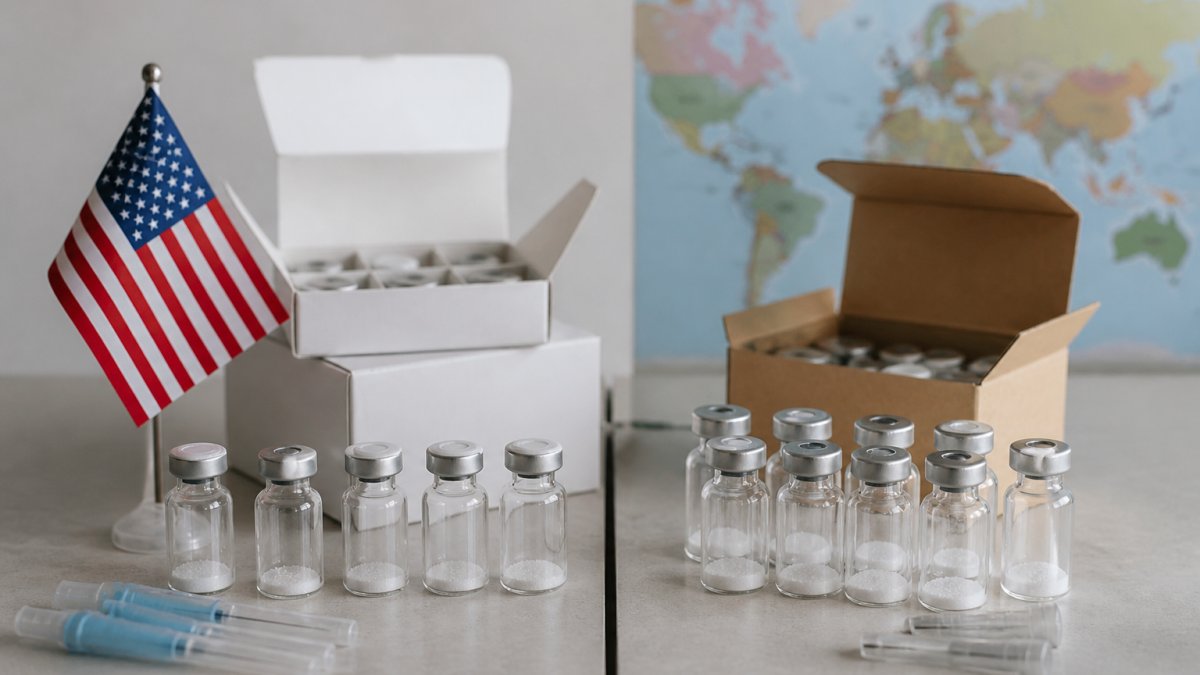
Table of Contents
- Why Sourcing Origin Matters for Research Peptides
- Domestic vs Overseas Research Peptides: Side-by-Side Comparison
- Domestic Synthesis vs Imported Active Ingredients
- How to Verify Country of Origin and Manufacturing Claims
- What a Peptide Certificate of Analysis Should Prove
- HPLC Testing for Research Peptides: Reading the Results
- Research Peptide Shipping and Customs: Timelines and Risks
- Total Landed Cost and a Risk-Based Sourcing Framework
- Frequently Asked Questions
Last Updated: October 18, 2026
Why Sourcing Origin Matters for Research Peptides
Where a vial of research peptides comes from shapes everything that follows: purity, documentation, delivery time, and how much recourse you have when something goes wrong. At Quality Peptide USA, we work with principal investigators and lab managers who have been burned by overseas sourcing and want a supply chain they can audit. The core tension in this debate is simple.
Sourcing origin is the combination of where a compound is synthesized, who tests it, and where it ships from. Those three things are not always the same country, and suppliers rarely volunteer the distinction. A peptide can be synthesized in one region, lyophilized and packaged in another, and shipped from a third.
Below, we break down how domestic and overseas research peptide sourcing actually differ, what a certificate of analysis should prove, and how to build a sourcing decision you can defend to your institution.
Domestic vs Overseas Research Peptides: Side-by-Side Comparison
The short answer: domestic sourcing wins on traceability and speed, overseas sourcing wins on unit price, and the gap between them narrows or widens depending on how much verification you demand.
| Factor | Domestic Sourcing | Overseas Sourcing | What to Request |
|---|---|---|---|
| Synthesis location | Stated per batch, tied to a facility | Often blended or undisclosed | Batch record naming the synthesis site |
| Analytical testing | Independent third-party lab, typically domestic | Varies; in-house claims common | COA naming the lab, method, and date |
| Certificate of analysis | Batch-specific, matches vial | Sometimes generic or reused across lots | Batch number cross-reference |
| Shipping time | Days, tracked end to end | Weeks, with customs variability | Carrier tracking and declared lead time |
| Import pathway | None required | Goods declaration and clearance | Commercial invoice and packing list |
| Recourse if a batch fails | Direct, contract-backed | Difficult across borders | Written replacement and returns policy |
| Unit price | Higher per vial | Lower per vial | Quote including shipping and duties |
| Total landed cost | Higher sticker, lower hidden cost | Lower sticker, higher hidden cost | Line-item cost worksheet |
Domestic sourcing means the synthesis, testing, and fulfillment happen under one regulatory and legal framework. Overseas sourcing splits those steps across jurisdictions, which is where the risk creeps in.
Three rows deserve more explanation than a table cell allows.
Testing independence. A certificate of analysis is only as strong as the lab behind it. Ask whether the testing lab is contractually independent of the supplier and whether the same lab tests every batch.
Import pathway. Any shipment crossing a border enters through a goods declaration.
Recourse. If a domestic batch fails your in-house verification, you have a contract, a return address, and a replacement path.
Domestic Synthesis vs Imported Active Ingredients
A domestic supplier is not automatically synthesizing everything onshore. That is the first thing to clarify. Some suppliers import the active ingredient and only handle finishing, packaging, and labeling domestically. Others, like Quality Peptide USA, synthesize, test, and package entirely within the United States.
Why does this distinction matter for laboratory research? Because imported active ingredients pass through more hands before they reach your bench. Each transfer is a point where documentation can thin out. A supplier that imports raw peptide and repackages it may still call the product domestic, and technically the finishing was domestic. The synthesis was not.
Ask directly: where is the peptide synthesized, and can you show documentation for that step? If the answer is vague, treat the product as imported regardless of where the shipping box originated.
- Domestic synthesis: one facility, one quality system, one paper trail
- Imported active ingredient with domestic finishing: two or more supply chain segments, more documentation gaps
- Fully imported: the most segments, the least visibility
This is the single most misunderstood point in the domestic vs overseas research peptides debate, and it is the one we would push hardest on in any supplier conversation.
How to Verify Country of Origin and Manufacturing Claims
Verification is a paperwork exercise, not a trust exercise. A supplier's origin claim means little until you can trace it to a document.
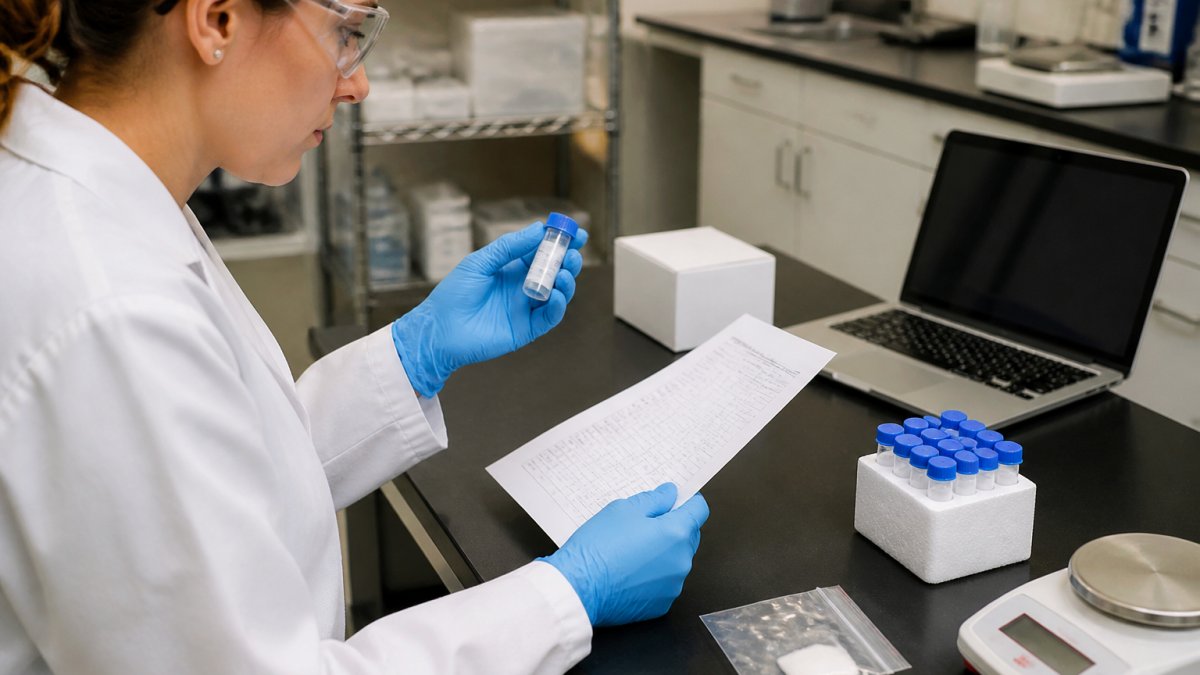
Here is the record trail that separates those claims.
1. The batch record. Ask for the manufacturing batch record or a summary of it.
2. The certificate of analysis. Check whether it names the testing laboratory, the batch number, the analytical method, and the test date.
3. The active ingredient origin record. For suppliers that import raw peptide and finish domestically, ask for documentation of the imported active ingredient's origin and entry.
4. The finishing and packaging record. Lyophilization, vialing, and labeling are separate operations.
5. The fulfillment record. Shipping origin tells you where the package left, not where the peptide was made.
A few verification questions worth asking every time:
- Does the certificate of analysis list a batch number matching your vial?
- Is the testing lab named, and is it independent of the supplier?
- Does the supplier state where synthesis occurred, not just where it shipped from?
- Can they provide documentation for the active ingredient's origin?
- Is the purity result tied to a specific test method and date?
- Does the batch record name the synthesis facility and the finishing facility separately?
If a supplier cannot answer these cleanly, that is your answer.
One caution on labels: a domestic shipping address, a domestic phone number, and a domestic website are fulfillment facts, not manufacturing facts.
What a Peptide Certificate of Analysis Should Prove
A peptide certificate of analysis is a batch-specific document that reports the identity, purity, and testing method for a compound, signed by the laboratory that performed the analysis. It should prove three things: that the vial contains the peptide it claims, that the purity matches the stated figure, and that an independent lab verified both.
Most certificates fall short in predictable ways. They list a purity percentage without naming the method. They reuse one certificate across multiple batches. They omit the testing lab entirely. Any of these should raise a flag.
What a solid certificate includes:
- Compound name, batch number, and manufacture date
- Purity result with the analytical method stated
- Testing laboratory name and signature
- Storage and handling conditions
- A clear research-use-only designation
That last point is not boilerplate. Research peptides are sold for laboratory research only, not for human or veterinary use, and the documentation should say so. A certificate that omits this boundary is a documentation problem, not just a legal one.
HPLC Testing for Research Peptides: Reading the Results
HPLC testing for research peptides is the analytical method that separates a sample into its components to measure purity, and reading the chromatogram tells you more than the headline percentage. High-performance liquid chromatography produces a peak for the target compound and smaller peaks for impurities. The main peak's area relative to the total gives you the purity figure.
Here is what the number alone will not tell you. A 99% purity result can still hide a meaningful impurity if that impurity co-elutes with the main peak. Reputable labs report the method, the column, and the detection wavelength so a reviewer can judge the result. When a certificate shows only a percentage and nothing else, you cannot evaluate how the number was produced.
What to look for in HPLC documentation:
- The stated method and detection wavelength
- A chromatogram image, not just a number
- Retention time for the main peak
- Any noted impurity peaks and their percentages
For sensitive in-vitro work, ask whether the lab also runs mass spectrometry confirmation alongside HPLC. Identity and purity are two different questions, and a complete certificate answers both.
Research Peptide Shipping and Customs: Timelines and Risks
Research peptide shipping and customs is where overseas sourcing gets expensive in ways the invoice never shows. Domestic orders typically arrive within days with tracked delivery. International imports move through customs, where goods declaration errors, holds, and inspections can add weeks with no reliable estimate.
Temperature control matters here too. Many research peptides require specific storage conditions, and a package sitting in a customs warehouse is a package exposed to conditions nobody documented. Lyophilized peptides are generally more stable in transit than reconstituted ones, but stability still depends on handling requirements being met end to end.
The practical risks of international imports:
- Customs delays that push a study timeline
- Goods declaration discrepancies that trigger holds
- Temperature excursions during extended transit
- Limited recourse if a shipment is damaged or seized
Domestic fulfillment removes the customs variable entirely. When we ship same-day for orders placed before 2PM EST, the package moves through one postal system with full tracking, and delivery typically lands within 2-3 business days. For a lab on a deadline, that predictability is worth more than the per-vial savings.
Total Landed Cost and a Risk-Based Sourcing Framework
Total landed cost is the full expense of getting a usable batch to your bench, including the purchase price, shipping, customs duties, testing to verify the batch, and the cost of a failed experiment if the material does not perform. Overseas suppliers look cheaper on the invoice and often are not cheaper once those layers are counted.
Use this framework to decide, based on risk rather than price alone:
- High-stakes in-vivo study with sensitive endpoints: domestic sourcing. Traceability and documentation are non-negotiable.
- Routine in-vitro work with re-testing capacity: overseas may be viable if you independently verify every batch.
- Tight timeline or grant deadline: domestic, for delivery reliability.
- Exploratory work with flexible budget and time: either, provided the certificate of analysis holds up.
FDA guidance on cGMP for pharmaceutical manufacturing sets the quality expectations that domestic cGMP-compliant facilities are built around, and USP standards for peptide quality offers reference methods for analytical testing. For researchers weighing import logistics, CBP guidance on importing goods explains the declaration process that international shipments pass through.
We built Quality Peptide USA around the domestic side of this framework: 100% US-based synthesis, packaging, and supply chain, with every batch verified by independent US labs and HPLC-verified to 99%+ purity. Every order ships with a transparent third-party certificate of analysis, and we replace products damaged in transit at no cost.
Frequently Asked Questions
How can researchers verify where a research peptide was made?
Ask the supplier for documentation that ties the batch number to a specific synthesis facility, not just a fulfillment warehouse. A complete peptide certificate of analysis should list the testing laboratory, lot number, and test methods used. Cross-check that the testing lab is independent of the manufacturer, and request records showing where synthesis, purification, and packaging each occurred. If a supplier cannot produce this paper trail, treat the country-of-origin claim as unverified.
What should a certificate of analysis include for research peptides?
A useful certificate of analysis lists the peptide name and sequence, batch or lot number, synthesis date, purity result from HPLC testing for research peptides, the analytical method used, and the identity of the testing laboratory. Mass spectrometry confirmation and appearance or solubility data add confidence. Look for a document that matches the specific vial you received, not a generic sample certificate reused across batches. Without batch-level matching, the certificate proves nothing about your material.
Are domestic research peptides easier to trace than imported peptides?
Domestic sourcing usually shortens the chain between synthesis and delivery, which makes peptide supply chain traceability simpler to document. Imported material may pass through multiple handlers, repackagers, and customs checkpoints, and each handoff is a place where records can break down. That does not make every domestic supplier reliable, but it does mean fewer parties to audit. Ask for batch-linked records either way and compare what each supplier can actually produce.
What delays can affect research peptide shipping and customs?
Imported shipments can stall at customs for goods declaration review, inspection, or missing paperwork, and delays of days to weeks are possible. Domestic orders typically avoid customs entirely and arrive within a few business days when the supplier ships same-day. Factor lead time into your study schedule: a batch that arrives late can disrupt a time-sensitive experiment. Tracked delivery and a clear replacement policy reduce the risk of losing material in transit.
Sourcing decisions carry real consequences for a study, and the cheapest vial is rarely the cheapest outcome. If you need verifiable purity, complete documentation, and delivery you can plan around, Quality Peptide USA provides domestic synthesis, independent HPLC testing, and same-day shipping backed by staff researchers who understand your protocol. Get started with Quality Peptide USA and build a supply chain your lab can audit.