


October 16, 2026 · Editorial Team
How to Store Peptides for Long-Term Stability
Learn how to store peptides for long-term stability. Step-by-step protocols for temperature, moisture, light, and handling to preserve purity and potency.
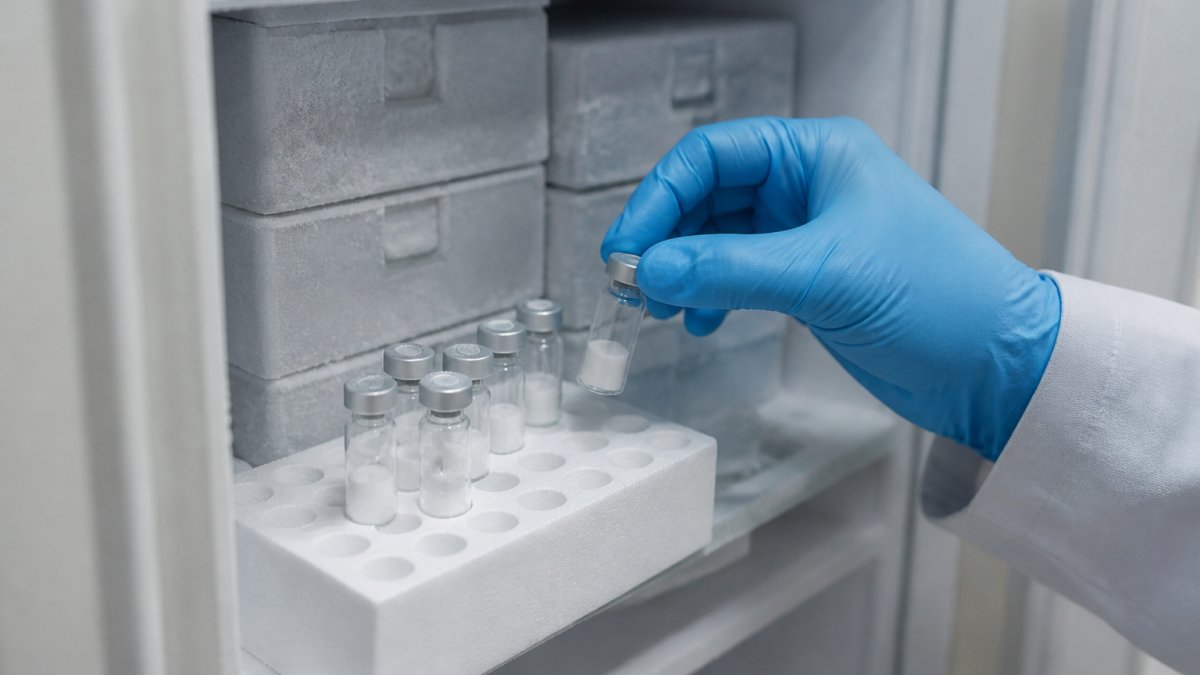
Table of Contents
- Understanding Peptide Stability and Storage Requirements
- How to Store Lyophilized Peptides Properly
- Reconstituted Peptide Storage Best Practices
- Peptide Storage Temperature Guidelines
- Recognizing and Preventing Peptide Degradation
- Understanding Peptide Shelf Life Expectations
- Handling, Shipping, and Contamination Control
- Frequently Asked Questions
Last Updated: October 16, 2026
Understanding Peptide Stability and Storage Requirements
Proper peptide storage long-term is one of the most critical aspects of maintaining research-grade compounds. Peptides are fragile molecules. They degrade through oxidation, hydrolysis, and moisture exposure.
The core challenge is that peptides break down through multiple pathways. Oxidation attacks amino acid side chains. Hydrolysis cleaves peptide bonds. Moisture accelerates both processes. Temperature fluctuations create freeze-thaw cycles that damage structure.
Understanding these degradation pathways is essential before choosing a storage method. Different peptide sequences have different vulnerabilities. A peptide rich in methionine or cysteine oxidizes faster than one without. A sequence containing histidine is more pH-sensitive.
At Quality Peptide USA, our HPLC-tested peptides come with detailed stability guidance specific to each sequence.
The good news: proper peptide storage long-term is straightforward once you understand the rules. This guide covers the exact protocols that work.
How to Store Lyophilized Peptides Properly
Lyophilized peptides are freeze-dried powders. They're stable longer than reconstituted solutions. The absence of water slows hydrolysis and oxidation dramatically. But they're not indestructible. Moisture and temperature are your two main enemies.
Temperature Control for Lyophilized Forms
Lyophilized peptides stored at -20°C (typical freezer temperature) remain stable for 6-12 months. Storage at -80°C extends stability to 2-3 years or longer. The colder the temperature, the slower chemical reactions proceed.
For long-term peptide storage, -80°C is the gold standard. A standard laboratory freezer maintains this reliably. Avoid repeated temperature cycling. Each freeze-thaw cycle damages peptide structure.
Temperature stability matters as much as absolute temperature. A freezer that swings between -75°C and -85°C causes more damage than one that holds steady at -20°C. Choose a dedicated research freezer with stable temperature control.
Moisture and Desiccant Management
Water is the enemy of lyophilized peptides. Even small amounts of moisture trigger hydrolysis. Desiccants absorb moisture and protect your compounds.
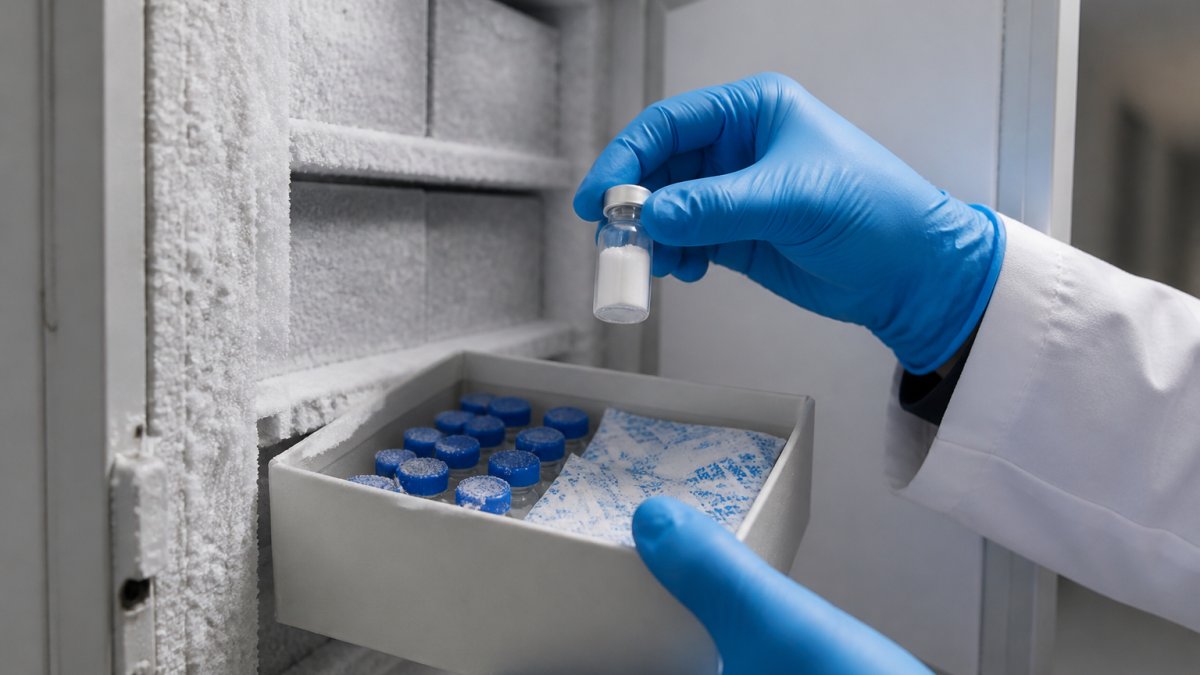
Store lyophilized peptides in sealed vials with desiccant packets inside. Silica gel or molecular sieve desiccants work well. Replace desiccants if they become saturated, they change color when they've absorbed maximum moisture. Keep vials sealed until you're ready to use them.
Humidity in the lab air matters too. Open a peptide vial and moisture from the air enters immediately. Work quickly. Minimize air exposure. Some researchers use a glove box with dry nitrogen atmosphere when handling peptides.
Store your peptide vials in a sealed container within the freezer. A small desiccator or airtight plastic box adds an extra moisture barrier. Label everything clearly with the peptide name, date, and storage temperature.
Reconstituted Peptide Storage Best Practices
Once you dissolve a lyophilized peptide in solution, stability drops significantly. A reconstituted peptide typically lasts 1-4 weeks at -20°C and 2-3 months at -80°C. This is why many researchers keep peptides in lyophilized form until they're ready to use them.
But reconstituted peptides are necessary for many applications. You need to dissolve them to measure concentration, run assays, or prepare for in vitro studies. The key is choosing the right buffer and minimizing freeze-thaw cycles.
Buffer Selection and pH Stability
The buffer you use determines how stable your reconstituted peptide will be. pH is critical. Most peptides are most stable between pH 4 and 8. Outside this range, hydrolysis accelerates. Histidine-rich peptides are particularly sensitive to pH shifts.
Common buffers for peptide storage include phosphate-buffered saline (PBS) and acetate buffers. PBS maintains pH around 7.4 and works well for most peptides. For peptides with histidine residues, a lower pH (around 5-6) may offer better stability.
Avoid buffers containing metal ions that catalyze oxidation. EDTA (ethylenediaminetetraacetic acid) is often added to chelate metals and slow oxidation. Some researchers add antioxidants like ascorbic acid or methionine to further protect their compounds.
The buffer you choose should match your downstream application. If you're preparing peptides for cell culture, sterile buffer is essential. If you're running spectroscopy, ensure the buffer doesn't interfere with your assay.
Aliquoting to Minimize Freeze-Thaw Cycles
Every time you freeze and thaw a peptide solution, you stress the molecule. Ice crystals form and can damage peptide structure. Dissolved salts concentrate in the unfrozen fraction, creating osmotic stress.
The solution: aliquot your peptide into small portions before freezing. Prepare 10-20 microliter aliquots in separate tubes. Freeze each aliquot separately. When you need peptide, thaw one aliquot and use it. Discard it after use rather than refreezing.
This approach eliminates repeated freeze-thaw cycles. It also reduces contamination risk. Each time you open a vial, you expose the peptide to air and potential contaminants. Smaller aliquots mean fewer openings of your main stock.
Label aliquots clearly with peptide name, concentration, buffer, date prepared, and expiration date. Store them in a -80°C freezer in a sealed container with desiccant.
Peptide Storage Temperature Guidelines
Choosing the right temperature depends on how long you need to store your peptide and what form it's in.
Short-Term vs. Long-Term Temperature Protocols
Short-term storage (days to weeks):
- Lyophilized peptides: room temperature or 4°C is acceptable for 1-2 weeks
- Reconstituted peptides: 4°C (refrigerator) for 1-2 weeks
- Keep in sealed, desiccated containers
Long-term storage (months to years):
- Lyophilized peptides: -20°C for 6-12 months, -80°C for 2-3 years or longer
- Reconstituted peptides: -20°C for 1-4 weeks, -80°C for 2-3 months
- Use sealed vials with desiccant inside the freezer
Room temperature storage is acceptable for lyophilized peptides only if they're in sealed, desiccated vials and you don't need them for more than a few weeks. Heat accelerates all degradation pathways. Even a warm lab speeds oxidation and hydrolysis.
Cryogenic Storage and Inert Atmospheres
For the most demanding applications, researchers use cryogenic storage in liquid nitrogen. Peptides stored in liquid nitrogen (around -196°C) remain stable for decades. This is overkill for most research but necessary for irreplaceable samples or long-term biobanking.
Liquid nitrogen storage requires special equipment and training. Vials must be sealed to prevent liquid nitrogen from entering. Thawing must be done carefully to avoid thermal shock.
An alternative is to store peptides under an inert atmosphere of nitrogen or argon gas. This removes oxygen and slows oxidation. Sealed vials filled with inert gas before freezing protect peptides from oxidation damage. This is especially useful for peptides containing methionine, cysteine, or tryptophan, residues vulnerable to oxidative damage.
Recognizing and Preventing Peptide Degradation
Even with perfect storage, peptides degrade over time. Knowing the signs of degradation helps you catch problems early.
Signs of Oxidation and Hydrolysis
Oxidation typically affects sulfur-containing amino acids (methionine and cysteine) and aromatic residues (tryptophan and tyrosine). You'll notice:
- Color change in the peptide powder (yellowing or browning)
- Loss of solubility, the peptide becomes harder to dissolve
- Mass shift when analyzed by mass spectrometry
- Loss of biological activity if the peptide is a hormone or growth factor
Hydrolysis breaks peptide bonds, shortening the chain. Signs include:
- Appearance of smaller fragments on HPLC analysis
- Loss of biological activity
- Changes in molecular weight on mass spectrometry
- Cloudiness in reconstituted solutions (aggregation from fragment accumulation)
To prevent both, maintain cold storage, minimize moisture and oxygen exposure, and avoid extreme pH. Quality Peptide USA tests every batch with HPLC before shipment. We provide Certificates of Analysis showing purity and stability. If you notice degradation in our peptides, we replace them free of charge and investigate the cause to prevent future issues.
Light Exposure and Thermal Sensitivity
Light degrades peptides. UV light is particularly damaging. Store peptides in amber or opaque vials, not clear glass. Keep them in a dark freezer. Don't leave peptide vials on the bench in sunlight.
Temperature cycling is another culprit. A freezer that defrosts periodically or a lab with large temperature swings between day and night degrades peptides faster. Invest in a stable -80°C freezer with temperature monitoring. Some labs use data loggers to track freezer temperature continuously.
Peptides containing tryptophan are especially light-sensitive. If your peptide has tryptophan, extra care with light protection is essential. Aromatic residues absorb light energy and generate reactive oxygen species that damage the peptide backbone.
Understanding Peptide Shelf Life Expectations
How long will your peptide last? The answer depends on the amino acid sequence, storage conditions, and form.
Amino Acid Sequence and Chemical Sensitivity
Not all peptides are created equal. A simple dipeptide with no special residues might last years in the freezer. A complex 50-residue peptide with multiple methionine, cysteine, and tryptophan residues might degrade in months.
Certain sequences are inherently unstable:
- Peptides with multiple cysteines form disulfide bonds and aggregate
- Peptides rich in serine or threonine are prone to hydrolysis
- Peptides with histidine are pH-sensitive
- Peptides with tryptophan degrade under light
When you order peptides, ask your supplier about stability expectations for your specific sequence. Quality Peptide USA provides sequence-specific storage recommendations with every batch. Our team can advise on storage protocols tailored to your peptide's chemistry.
Lyophilized peptides in sealed, desiccated vials at -80°C typically remain stable for 2-3 years. Reconstituted peptides in appropriate buffer at -80°C last 2-3 months. Room temperature storage of lyophilized peptides is safe for 1-2 weeks only.
Handling, Shipping, and Contamination Control
How you handle peptides during use and transport affects stability. Contamination introduces enzymes and microorganisms that accelerate degradation.
Sterile Technique and Centrifugation During Use
Always use sterile technique when handling peptides. Wear gloves. Use sterile pipette tips and tubes. Minimize air exposure. Work quickly.
If your reconstituted peptide looks cloudy, centrifuge it gently to remove aggregates. Aggregated peptide fragments can clog assays or skew results. Centrifuge at low speed (1,000-3,000 g) for 5-10 minutes. Transfer the clear supernatant to a fresh tube.
Never reuse a peptide aliquot after thawing. Discard it. This prevents contamination and repeated freeze-thaw damage.
Cold Chain Integrity During Transport
When peptides ship, temperature control is critical. A peptide left on a warm dock for hours can degrade significantly. Quality Peptide USA ships all peptides with ice packs and insulated packaging.
Track your shipment. If a package sits in a warm environment for extended periods, the peptide may be compromised. Upon arrival, immediately place peptides in appropriate storage (freezer for lyophilized, -80°C for reconstituted).
If a peptide arrives damaged or you suspect degradation during shipping, contact your supplier immediately. Quality Peptide USA replaces damaged peptides free of charge and investigates the cause to prevent future issues.
Proper peptide storage for long term stability protects your research investment and ensures reproducible results.
When you need research-grade peptides with verified stability, Quality Peptide USA delivers. Every batch is HPLC-tested for purity and comes with a detailed Certificate of Analysis.
| Storage Form | Temperature | Expected Shelf Life | Key Protections |
|---|---|---|---|
| Lyophilized | -80°C | 2-3 years | Sealed vial, desiccant, dark storage |
| Lyophilized | -20°C | 6-12 months | Sealed vial, desiccant, dark storage |
| Lyophilized | Room temp | 1-2 weeks | Sealed vial, desiccant, dark storage |
| Reconstituted | -80°C | 2-3 months | Appropriate buffer, aliquoted, inert atmosphere |
| Reconstituted | -20°C | 1-4 weeks | Appropriate buffer, aliquoted, sealed |
| Reconstituted | 4°C | 1-2 weeks | Appropriate buffer, sealed, sterile |
Frequently Asked Questions
How long can peptides be stored at room temperature?
Lyophilized peptides stored in sealed vials with desiccants can remain stable at room temperature for days to weeks, depending on the amino acid sequence and environmental humidity. Reconstituted peptides should not be stored at room temperature for more than a few hours; they degrade rapidly due to hydrolysis and oxidation. For long-term peptide storage stability, refrigeration at 2-8°C or freezing at -20°C or -80°C is essential.
Should peptides be stored as a powder or in solution?
Lyophilized peptides (powder form) are significantly more stable for long-term storage because they are less prone to hydrolysis and oxidation. Reconstituted peptides in solution require careful buffer management and cold storage to prevent degradation. If you need peptides for extended periods, keep them lyophilized in sealed vials with desiccants until immediately before use. Dissolve only the amount you need for your experiment.
What is the typical shelf life for research-grade peptides?
Factors affecting peptide shelf life include amino acid composition, presence of hydrophobic residues prone to oxidation, and exposure to light and moisture. Always reference your batch's Certificate of Analysis for specific stability data.
Can peptides be damaged during shipping, and how is cold chain maintained?
Yes, temperature fluctuations, moisture infiltration, and physical shock during shipping can degrade peptides. Reputable suppliers maintain cold chain integrity by using insulated packaging with phase-change materials or dry ice, shipping via expedited services, and including temperature monitoring devices. Upon arrival, inspect vials for frost, condensation, or damage. If cold chain appears compromised, contact your supplier immediately for a replacement, as peptide degradation may have occurred even if the vial appears intact.