


November 2, 2026 · Editorial Team
Is Peptide Endotoxin Testing for Research Necessary?
Endotoxin testing for research peptides confirms low pyrogen risk before in vitro or in vivo work. Learn LAL, rFC, and report interpretation steps.
Last Updated: November 2, 2026
Quick Summary
Endotoxin testing for research peptides measures bacterial lipopolysaccharide (LPS) contamination that could invalidate sensitive assays, telling you whether a sample is fit for cell culture or in vivo work. Sterility and endotoxin are different tests, and a sterile vial can still be pyrogenic. Ask for endotoxin data before committing a batch to any study with in vivo endpoints.
- Immune cells respond to picogram levels of LPS, so contamination can mimic the effect you are studying.
- Gel-clot LAL gives a qualitative pass/fail at roughly 0.03 to 0.125 EU/mL with low reagent cost.
- Kinetic chromogenic LAL offers the widest quantitative range and best tolerance for turbid or colored peptide samples.
- Recombinant Factor C replaces horseshoe crab lysate but can miss some non-endotoxin pyrogens that LAL picks up.
- A PPC recovery outside the acceptance window, commonly 50 to 200 percent, invalidates the run.
Table of Contents
- What Endotoxin Testing for Research Peptides Reveals
- Why Peptide Endotoxin Testing Matters Before Sensitive Studies
- LAL Test for Peptides: Gel-Clot, Kinetic Chromogenic, and Kinetic Turbidimetric
- Recombinant Factor C Endotoxin Test as a Non-Animal Alternative
- Peptide Sterility Testing vs Endotoxin Testing
- Sample Preparation, Dilution, and Matrix Interference in Peptide Samples
- Endotoxin Test Report Interpretation: Limits, MVD, and PPC Recovery
- Requesting Endotoxin-Tested Peptides for Your Next Study
- Frequently Asked Questions
What Endotoxin Testing for Research Peptides Reveals
Endotoxin testing for research peptides measures bacterial lipopolysaccharide (LPS) contamination that could invalidate sensitive assays. Endotoxins are fragments of gram-negative bacteria cell walls. They survive most sterilization methods. A vial can look clean, pass a visual check, and still carry enough LPS to skew immune readouts.
Endotoxin testing for research is the process of quantifying that LPS load against a defined limit. It tells you whether a peptide sample is fit for cell culture, in vivo work, or any study where a false inflammatory signal would ruin the data.
Sterility and endotoxin are different tests. A sterile vial can still be pyrogenic.
Why Peptide Endotoxin Testing Matters Before Sensitive Studies
Sensitive studies fail quietly when endotoxin slips through. Immune cells respond to picogram levels of LPS. That response can look exactly like the effect you are studying.
A common mistake is assuming low bioburden equals low endotoxin. Dead bacteria still leave LPS behind. So a sample that passes a sterility check may still trigger inflammation in a culture dish.
Below, we'll show you where this contamination comes from and how to catch it before it costs you a study.
Key risks to watch:
- False cytokine signals in immune assays
- Masked or exaggerated peptide activity
- Wasted reagents on compromised batches
- Unreproducible results across replicates
For any work with in vivo endpoints, ask for endotoxin data before you commit a batch. That single step protects months of work.
LAL Test for Peptides: Gel-Clot, Kinetic Chromogenic, and Kinetic Turbidimetric
The LAL test for peptides uses Limulus amebocyte lysate, a reagent derived from horseshoe crab blood that clots or changes color when it encounters bacterial endotoxin. Three formats dominate research labs, and the right choice depends on your peptide's matrix, your required sensitivity, and whether you need a number or a pass/fail call.
- Gel-clot: The original compendial method. You mix sample with lysate, incubate at 37°C for about 60 minutes, and invert the tube to check for a firm clot. It is a qualitative pass/fail at a stated sensitivity (commonly 0.03 or 0.125 EU/mL). Low reagent cost and simple equipment, but operator-dependent endpoint reading and no numeric result.
- Kinetic turbidimetric: Measures the increase in turbidity as the clot forms, tracked over time on a plate reader at 340 nm or similar. The time to reach a threshold onset is inversely proportional to endotoxin concentration, so you get a quantitative result across roughly 0.01-10 EU/mL depending on the kit.
- Kinetic chromogenic: Tracks a color change from a chromogenic substrate cleaved during the LAL cascade, read at 405 nm. Widest quantitative range and the best tolerance for turbid or colored samples, which matters for peptide matrices that are not water-clear.
How to choose for a peptide sample:
| Format | Result type | Typical sensitivity | Best fit | Main limitation |
|---|---|---|---|---|
| Gel-clot | Pass/fail | ~0.03-0.125 EU/mL | Quick screen, low equipment budget | No number; reader-dependent |
| Kinetic turbidimetric | Quantitative | ~0.01-10 EU/mL | Clear, colorless peptide solutions | Turbidity/color interference |
| Kinetic chromogenic | Quantitative | ~0.005-10 EU/mL | Colored or turbid peptides; widest range | More reagents; substrate cost |
Assay sensitivity sets your detection limit. Choose a method whose sensitivity sits below your endotoxin limit, or you cannot prove compliance. For a peptide with a limit of 5 EU/mL, a gel-clot kit at 0.03 EU/mL gives you ample headroom; a chromogenic kit at 0.005 EU/mL gives you more room to dilute out matrix effects before you hit the floor.
If your peptide solution is visibly colored or turbid, start with kinetic chromogenic. Turbidimetric formats read the same optical signal the sample already carries, so a colored peptide can bias the onset time.
Gel-clot suits a quick screen. Kinetic methods suit reporting a numeric result. The chromogenic format handles turbid or colored samples better. Whichever format you pick, confirm it with a positive product control in your actual matrix before you trust a batch result.
Recombinant Factor C Endotoxin Test as a Non-Animal Alternative
The recombinant Factor C endotoxin test replaces horseshoe crab lysate with a cloned enzyme. It reacts to endotoxin the same way LAL does, but without harvesting animals.
Why does this matter? Horseshoe crab populations face pressure, and some regions limit lysate sourcing. rFC removes that dependency.
The rFC assay runs much like a kinetic chromogenic test. It fits automated plate readers and gives a quantitative result. Many labs adopt it for routine screening and keep LAL for confirmatory runs.
One caveat: rFC responds to endotoxin specifically, so it can miss some non-endotoxin pyrogens that LAL picks up. Match the method to your study's needs, not to convenience.
Peptide Sterility Testing vs Endotoxin Testing
Peptide sterility testing and endotoxin testing answer different questions. Sterility asks whether living microbes are present. Endotoxin testing asks whether bacterial LPS is present, alive or dead.
A vial can pass sterility and fail endotoxin. That gap is exactly why both tests belong in a quality control panel.
| Test | What It Detects | Typical Method | Limitation |
|---|---|---|---|
| Sterility | Living bacteria and fungi | Membrane filtration, direct inoculation | Misses dead-cell LPS |
| Endotoxin | Bacterial lipopolysaccharide | LAL or rFC assay | Does not confirm sterility |
| Purity | Peptide content and variants | HPLC | Says nothing about LPS |
Run both when a study is sensitive. Skip endotoxin and you gamble on a hidden pyrogen.
Sample Preparation, Dilution, and Matrix Interference in Peptide Samples
Sample preparation decides whether your endotoxin result means anything. Peptides often interfere with the assay. They can inhibit the reaction or enhance it, and both distort the number.
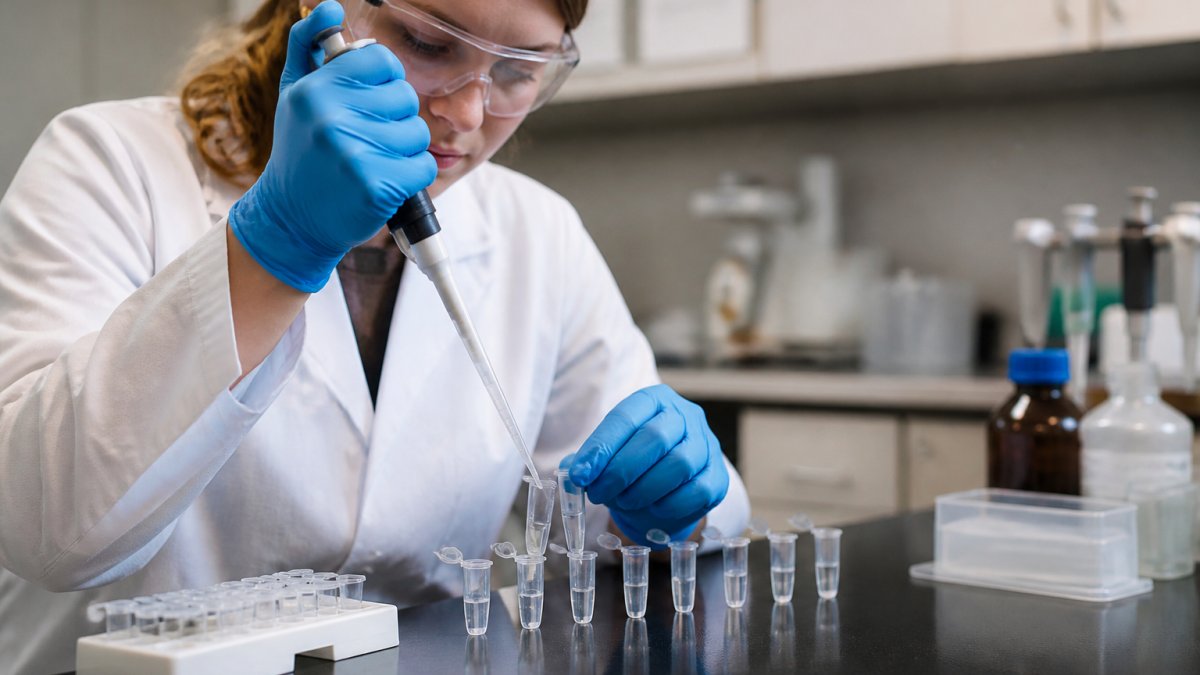
Step 1, Start with clean technique. Use depyrogenated glassware and endotoxin-free water. Reconstitute lyophilized peptide carefully, following a validated protocol such as our guide to reconstituting lyophilized peptides for laboratory research.
Step 2, Characterize the matrix before you dilute. Note three things about your peptide solution: pH, visible color/turbidity, and solubility at the working concentration. Each maps to a known interference mechanism:
- pH extremes: LAL and rFC enzymes have a narrow optimal pH (roughly 6-8). A peptide reconstituted in acidic or basic buffer can inhibit the cascade. Buffer the diluted sample into range, or dilute into endotoxin-free buffer at neutral pH.
- Color and turbidity: These bias optical kinetic reads. Chromogenic formats tolerate them better; if you must use turbidimetric, dilute until the background is negligible.
- Poor solubility / precipitation: Undissolved peptide can sequester endotoxin or clog the reader. Use a validated solubilization scheme (sonication, appropriate solvent) before testing, and never test a visibly precipitated sample.
- Cationic peptides: Strongly positively charged peptides can bind endotoxin and mask it, producing a false low. This is enhancement/inhibition in disguise; spike recovery is the only reliable check.
Step 3, Dilute, but respect the MVD. Dilution reduces matrix effects and brings the sample into the assay's range. But dilution has a ceiling, set by the maximum valid dilution (MVD).
Step 4, Run a spike recovery (PPC) in your actual matrix. Add a known amount of endotoxin to your diluted sample and measure recovery. A result inside your acceptance window (commonly 50-200% recovery) means the matrix is not masking the signal. If recovery fails, work through this sequence:
- Increase dilution toward the MVD and re-run the spike. Many peptide interferences resolve with 2- to 10-fold additional dilution.
- Buffer-exchange into endotoxin-free neutral buffer if pH is the suspect.
- Try a different format, move from turbidimetric to chromogenic, or to rFC, if optical interference persists.
- Use the manufacturer's interference-suppressing diluent if the kit offers one; these are formulated to neutralize common matrix effects.
- Document the failed run and the fix so the next batch starts from a validated dilution.
Watch Out: A PPC recovery outside the acceptance window invalidates the run. Do not report a pass/fail from a failed PPC, re-test with adjusted dilution or format.
A common pattern with research peptides is that the first dilution fails PPC, the second or third passes, and the validated dilution becomes the standard for that peptide lot. Build that number into your SOP rather than rediscovering it every time.
Endotoxin Test Report Interpretation: Limits, MVD, and PPC Recovery
Reading an endotoxin test report comes down to three numbers: the limit, the MVD, and the PPC recovery.
- Endotoxin limit: The ceiling your sample must stay under for its intended use.
- MVD: The most you can dilute the sample and still detect endotoxin at the limit.
- PPC recovery: The positive product control confirms the assay worked in your matrix. Recovery within the accepted window means no masking.
If PPC recovery falls outside the window, the run is invalid. Inhibition or enhancement is present, and you must re-test with adjusted dilution.
For help reading certificates and test reports line by line, our guide to verifying peptide purity with HPLC and mass spectrometry walks through the fields. And to tie results to your records, see how to document peptide lot numbers in research records so each COA matches its sample.
Requesting Endotoxin-Tested Peptides for Your Next Study
Ask suppliers three questions before you order: which method they use, what limit they test against, and whether they share batch-level results.
Quality Peptide USA synthesizes, tests, and packages its peptides entirely in the US, and offers same-day shipping for orders placed before 2PM EST. For details on the panels run on each lot, see our lab testing you can verify.
Ready to source peptides with documented endotoxin data? Contact our research support team to request COAs or ask about your next study.
Frequently Asked Questions
What is endotoxin testing for research peptides?
Endotoxin testing measures lipopolysaccharide (LPS) from gram-negative bacteria in a peptide sample. Because LPS can trigger fever and inflammation in vivo, researchers use assays such as LAL or recombinant Factor C to confirm that a batch falls below an acceptance criterion before sensitive in vitro or in vivo work. The result is reported in endotoxin units per milliliter or per milligram and should be read alongside the assay sensitivity, dilution scheme, and positive product control recovery.
Does endotoxin testing prove that a peptide is sterile?
No. Peptide sterility testing and endotoxin testing answer different questions. Sterility testing checks for viable microorganisms, while endotoxin testing quantifies bacterial LPS, which can remain after bacteria are killed. A batch can pass sterility and still carry endotoxin, or show low endotoxin and fail sterility. Researchers should request both results when the study requires assurance on viable contamination and pyrogen risk, and read each report against its own acceptance criteria.
Can a peptide interfere with an endotoxin test?
Yes. Peptide samples can inhibit or enhance the assay, causing false-low or false-high results. The standard check is a spike recovery or positive product control (PPC): a known amount of endotoxin is added to the diluted sample, and recovery should fall within the assay's validated window, often 50 to 200 percent. If recovery is outside that range, try a higher dilution within the maximum valid dilution (MVD), adjust pH, or use a different method such as recombinant Factor C.
How should researchers interpret endotoxin test results?
Start with the method, assay sensitivity, dilution factor, and MVD. Confirm the PPC recovery is in range, otherwise the reported value is unreliable. Compare the result to the endotoxin limit or acceptance criterion set for your study, not to a generic number. Check that the report names the lot, the test date, the laboratory, and the units. If the value is near the limit or the recovery is borderline, ask for a repeat or a second method before releasing the batch.
Sensitive studies leave no room for hidden pyrogens. Quality Peptide USA gives you independently verified, HPLC-tested peptides with transparent certificates of analysis for every batch, plus same-day shipping and expert support from staff researchers. Get started with Quality Peptide USA and source peptides you can document from vial to result.
